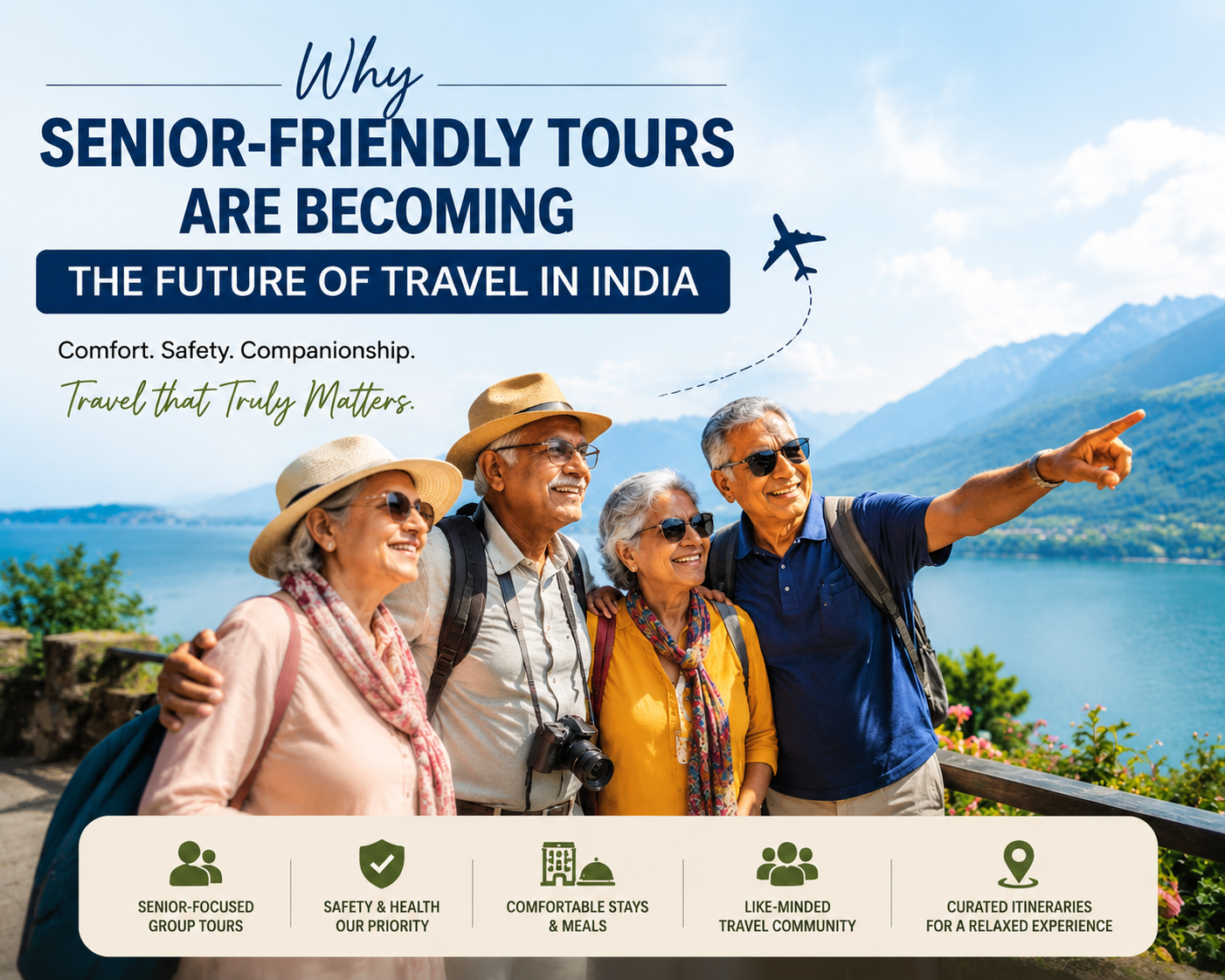
India’s travel industry is undergoing a quiet but powerful transformation. While adventure tourism, luxury escapes, and digital nomad travel continue to grow, one of the most significant shifts is happening in a segment that was once largely overlooked—senior-friendly travel. Today, senior-friendly tours are no longer a niche offering; they are rapidly becoming a core part of how travel companies design experiences in India.
With rising life expectancy, better health awareness, improved financial stability among retirees, and a cultural shift toward experiential living, senior citizens are traveling more than ever before. But what has truly changed is not just the number of travelers—it is the way travel is being designed for them.
Senior-friendly tours are built around comfort, safety, pacing, companionship, and care. These are not just travel packages; they are thoughtfully curated experiences designed to make travel accessible, enjoyable, and stress-free for older adults. This evolution is reshaping the future of tourism in India. TripToniq, a leading curated travel brand for 35+ and senior travelers in India, are at the forefront of this change, redefining how travel experiences are designed for older adults.
India’s travel industry has traditionally been youth-focused. Backpacking trips, adventure tourism, and fast-paced itineraries have dominated the market for years. However, demographic and lifestyle changes are now shifting this balance.
Today, India has a rapidly growing population of individuals above 50 and 60 years of age. Many of them are:
Unlike previous generations, today’s seniors are not slowing down—they are redefining what retirement looks like. Travel has become a central part of their lifestyle.
This shift has created a strong demand for tours that prioritize comfort, structure, and emotional well-being.
Senior-friendly tours are specially designed travel packages that cater to the physical, emotional, and logistical needs of older travelers. Unlike conventional tours, these are not rushed or physically demanding. Instead, they focus on ease and enjoyment.
Key features typically include:
These tours are not about doing more—they are about experiencing better.
One of the biggest reasons for the rise of senior-friendly tours is increased life expectancy. People are living longer, healthier lives, and retirement is no longer seen as an end point.
In fact, retirement is increasingly becoming a new beginning.
Many seniors today are physically active, mentally alert, and financially prepared to explore the world. As a result, they are seeking travel experiences that match their lifestyle—safe, structured, and enjoyable.
Another major factor is financial stability. Many retirees today have:
This gives them the freedom to spend on experiences rather than material assets.
Travel becomes a meaningful investment—one that offers emotional satisfaction, memories, and personal fulfillment.
Younger travellers often look for adventure and fast-paced exploration, but senior travelers are shifting toward meaningful experiences.
They prefer:
Senior-friendly tours align perfectly with this mindset by focusing on quality of experience rather than quantity of destinations covered.
Safety is one of the most important concerns for senior travellers. Factors such as:
make independent travel more challenging.
Senior-friendly tours address these concerns by offering:
This reduces stress for both travellers and their families, making such tours a preferred choice.
One of the most powerful aspects of senior-friendly tours is the social experience they provide.
Many seniors travel alone after retirement due to:
Group tours offer companionship, turning travel into a shared emotional journey.
Benefits include:
This emotional dimension is one of the strongest drivers of growth in this segment.
Contrary to common belief, seniors today are increasingly tech-aware. Smartphones, digital payments, and online booking platforms have made travel more accessible.
Travel companies are also using technology to enhance senior-friendly experiences:
Technology is not replacing human support—it is enhancing it.
The rise of senior-friendly tours has encouraged travel companies in India to rethink their entire approach.
Modern travel providers now focus on:
Instead of one-size-fits-all tours, packages are tailored based on comfort levels, interests, and pace.
Professionals trained to handle senior travelers accompany groups throughout the journey.
Hotels, transport, and sightseeing routes are selected based on ease of access rather than popularity alone.
Medical considerations are now integrated into travel planning.
This shift shows that senior travel is no longer an afterthought—it is becoming a specialized industry segment.
Some destinations naturally align better with senior-friendly travel due to their comfort, accessibility, and relaxed pace:
These destinations are increasingly being curated into slow-paced, comfort-based itineraries.
Also Read : Golden Years Getaways: Tailored Vacations for Seniors Who Want to Explore
Beyond logistics and planning, senior travel carries deep emotional significance.
For many, it represents:
This emotional depth is what makes senior-friendly tours more than just tourism—they are life experiences.
The future of travel in India is shifting toward personalization, inclusivity, and experience-based tourism. Within this evolution, senior-friendly tours are expected to grow significantly.
Key trends shaping the future include:
Travel companies that understand and adapt to this shift will lead the next phase of growth in the industry.
Senior-friendly tours are not just a growing trend—they are redefining the travel industry in India. As people live longer, healthier, and more fulfilling lives, the demand for comfortable, safe, and meaningful travel experiences continues to rise.
These tours reflect a deeper change in society: the belief that exploration and adventure do not have an age limit. Instead, travel becomes even more meaningful with time, experience, and perspective.
In this new era, senior-friendly travel is not the future of a small segment—it is the future of travel itself.
Category: Blog
